
Table of contents
Most football fans watch for goals, red cards, and late drama, yet experienced bettors tend to watch for something quieter and far more predictive: patterns that repeat before the highlight reels begin. With the global sports-betting market now measured in the tens of billions of dollars annually, and major leagues drowning in data feeds, the edge rarely comes from “gut feel” alone. It comes from reading a match like a system, spotting small shifts in tempo, risk, and personnel, and understanding how markets often react a few minutes too late.
They track the game’s hidden rhythm
Forget the scoreline for a moment: who is actually controlling the match? Seasoned bettors look for a team’s “rhythm” because it often shows up before the breakthrough does, and because it explains why a 0-0 can be fragile or rock-solid. Rhythm is not just possession percentage, which can be cosmetic when a side recycles the ball harmlessly, it is the sequence of actions that leads to credible chances: progressive passes, entries into the penalty area, pressure that forces rushed clearances, and the ability to sustain attacks without being punished in transition.
That is why live bettors, in particular, watch the spacing between lines and the way a team presses after losing the ball. A coordinated counter-press can pin an opponent for long spells, raising the likelihood of corners, shots, and eventually goals, while a disjointed press can be worse than no press at all, because it opens lanes for direct balls into space. The best bettors will compare what they see to the expectations implied by odds, and if the market still prices a match as “balanced” while one side is gradually suffocating the other, they know that value can exist even when the scoreboard has not yet moved.
Metrics can help, but the key is interpreting them in context. Expected goals, for instance, is widely cited, yet sharp bettors pay attention to how xG is being accumulated. Is it coming from one chaotic scramble and a penalty shout, or from repeated cut-backs and one-versus-one situations created by overloads wide? A team generating steady, high-quality entries tends to keep generating them, whereas a side living off a single freak chance often regresses. Even without a live data feed, you can often see it in real time: the full-backs pinned deep, the midfield outnumbered, the centre-backs forced into emergency defending.
Rhythm also changes with game state, and bettors anticipate that rather than react to it. When an underdog takes a surprise lead, their rhythm frequently shifts from proactive to defensive, and if they lack the structure to protect the box for 60 minutes, the “lead” can become a trap. Conversely, a favourite that goes behind may accelerate too quickly, leaving itself open to counters; that can create opportunities in markets that reflect volatility, including next goal, total goals, or corners. The point is simple: seasoned bettors are not watching “who is better” in an abstract sense, they are watching which team’s style is currently dictating where the next ten minutes will be played.
They read line-ups beyond the star names
One of the most common mistakes casual bettors make is treating team news as a checklist of famous players. Experienced bettors treat it like a structural report, because a line-up can quietly change how a side defends set pieces, progresses the ball, or manages fatigue. A full-back with poor recovery speed, a midfield pairing that lacks a natural ball-winner, or a striker who cannot hold the ball under pressure can reshape the match in ways that are not captured by headline injuries alone.
Start with roles, not reputations. A team may replace an injured winger with another winger, but if the substitute is more of an inside forward, the full-back behind him may be exposed, and the opponent’s wide player suddenly becomes a threat. Similarly, a change at centre-back is not just about “quality”, it can affect the defensive line’s height. A slower pairing often drops deeper, which reduces the space behind but invites pressure and crosses; that can swing corners and shot volume even if it stabilises the risk of balls over the top.
Then there is the manager’s intent, which is frequently hinted at through selection. A conservative midfield suggests a plan to control transitions, while an extra attacker signals an appetite for a higher event game, more shots, more counter-attacks, and often more mistakes. Bettors who specialise in totals markets, such as over/under goals, look for these cues because stylistic intent can matter as much as raw talent. In domestic leagues where teams play each other repeatedly, the tactical cat-and-mouse is even clearer, and line-ups can reveal whether a coach is adapting or stubbornly repeating a plan that has already failed.
Squad rotation is another edge that is easy to underestimate. In congested schedules, which are common across Europe and increasingly in international windows, fatigue does not only mean slower running, it can mean slower decisions. That shows up in late tackles, sloppy clearances, and set-piece concessions. When a team fields a rotated back line with limited minutes together, bettors will often anticipate communication errors, particularly on dead balls. The Premier League and the Champions League have offered plenty of examples over the past seasons: teams that look coherent with their first-choice XI, then suddenly appear vulnerable when a couple of key relationships are broken.
Finally, seasoned bettors understand that a bench matters in live markets. A side with game-changing substitutes can turn a match late, while a team with few options may fade predictably. This affects not only match odds but also late goal markets, and it is one reason why watching the warm-up, the manager’s typical substitution patterns, and the profiles of replacements can add more value than scanning social media for last-minute rumours.
They respect the market, but challenge it
The market is not an enemy, it is a mirror of collective belief, and smart bettors treat it as information. Odds move for reasons: confirmed team news, weather updates, sharp money, public sentiment, and sometimes simple narratives that spread fast and stick. The experienced bettor’s job is to distinguish signal from noise, then decide whether the price is fair, generous, or distorted.
This starts with understanding what the odds imply. Decimal odds can be translated into an implied probability, and once you think in probabilities, questions become sharper: does this team really win this match 55% of the time, given the injuries, the schedule, and the tactical match-up? If not, where is the mispricing, and how should it be exploited? Seasoned bettors also compare markets against each other, because inconsistencies can reveal opportunities. For example, if match odds suggest a cautious, low-scoring contest, but the totals and both-teams-to-score prices imply a more open game, something does not add up. The mismatch may be justified, but it may also be a sign that a story has been overbought.
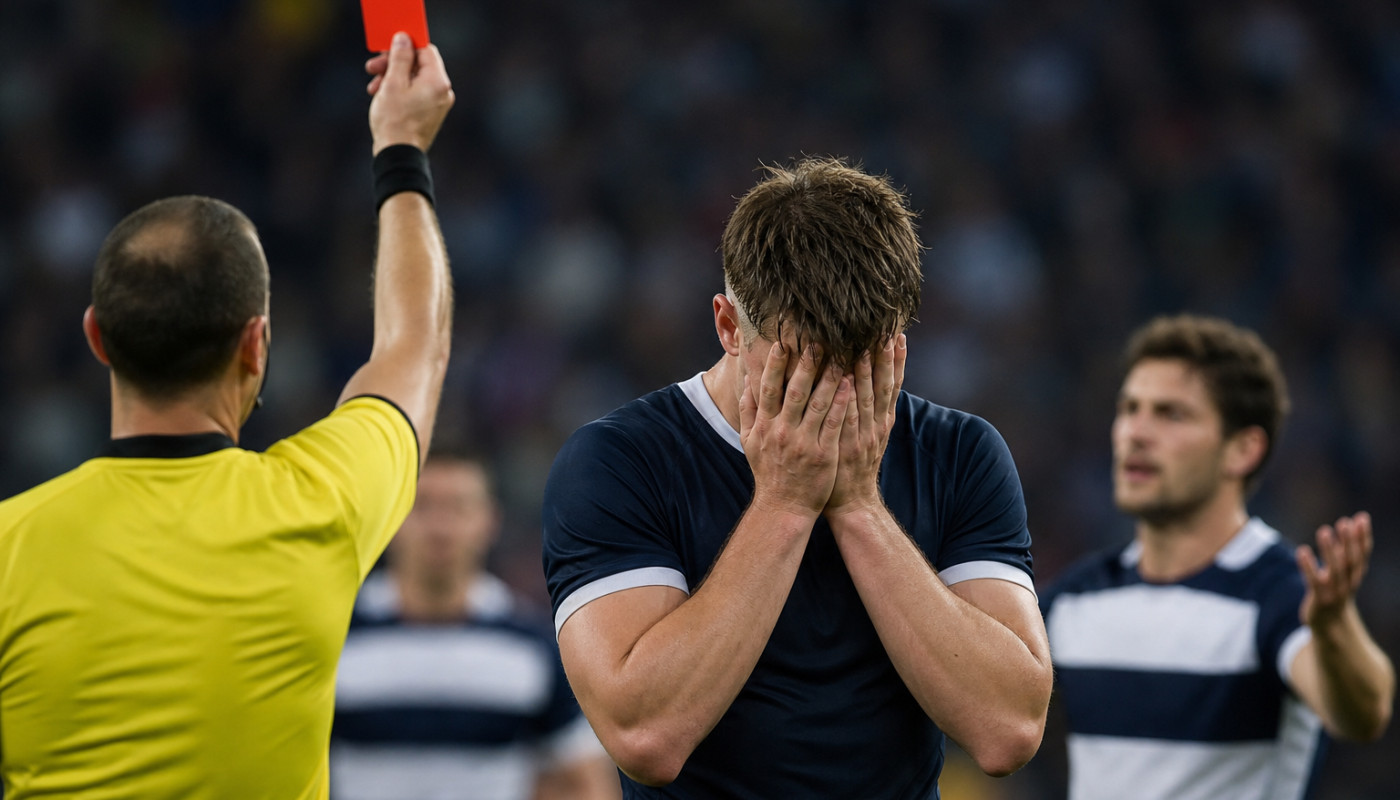
Live betting amplifies this dynamic, because markets react to events, sometimes too aggressively. A red card, an early goal, or a brief spell of pressure can shift prices dramatically, yet the actual impact depends on context. Not all red cards are equal: a dismissal for a defensive midfielder can be more damaging than one for a forward, and a red card at 10 minutes is not the same as one at 75. Experienced bettors watch how the team reorganises, whether it can still threaten on the break, and whether the opponent has the tools to turn possession into chances. Markets often price the “event” quickly, then take longer to price the “new match”. That lag is where discipline and observation matter.
Another angle is the public’s tendency to overvalue momentum. A team can dominate for ten minutes without producing a single high-quality chance, and yet the market might shorten their price because it feels like a goal is coming. Seasoned bettors look for measurable threat: touches in the box, clear chances, sustained pressure that leads to set pieces, and defensive errors under stress. When dominance is sterile, they are cautious, and when a team is creating repeatable danger, they are quicker to trust it even if the commentators are still talking about “against the run of play”.
None of this requires mystique, but it does require a framework. Bettors who build one tend to be more consistent, and resources like 11v11 can be useful as a reference point for how disciplined approaches are structured, from pre-match research to in-play decision-making. The critical step is not copying a tip, it is learning to test assumptions against what the match is actually showing you, minute by minute, and price by price.
They spot the moments that flip a match
A football match is not a straight line; it is a series of turning points, and the sharpest bettors are trained to anticipate which moments are most likely to flip the story. Some are obvious, such as a penalty, a red card, or a serious injury, but many are subtle and happen repeatedly: a full-back picking up an early yellow, a centre-back struggling with aerial balls, a winger constantly isolated two-versus-one, or a goalkeeper looking uncertain under crosses. These micro-signals influence how a team will behave, and markets do not always absorb them immediately.
Set pieces are a prime example, because they are both repeatable and under-analysed by casual viewers. A team that wins a stream of corners is not guaranteed a goal, but it is generating a high-frequency scoring pathway, and it can also force defensive panic that leads to second balls and scrambles. At elite level, a significant share of goals comes from dead-ball situations across a season, and bettors who pay attention to delivery quality, marking schemes, and match-ups can often predict when pressure is building. If a side has a clear aerial advantage, or the opponent looks disorganised on every corner, that matters even if nothing has gone in yet.
Discipline and refereeing also shape turning points. Some referees allow physical duels, others whistle early, and teams adapt. A high-pressing side that relies on tactical fouls to stop counters can be neutralised if the referee starts producing yellows quickly, and once key players are booked, their aggression drops, creating space for opponents to play through. The experienced bettor does not merely count cards, they consider what the cards do to behaviour: does the right-back stop stepping out, does the defensive midfielder stop breaking up transitions, does the team’s press lose bite?
Then there is psychology, which is real but must be anchored to observation. A team that misses a big chance can either tighten up or become frantic, and you can often see it in their decision-making. Are they forcing low-percentage shots, overhitting final balls, and losing their shape, or are they calmly returning to the patterns that created the chance? Likewise, when a team scores, do they retreat instantly, or do they keep pushing for a second? Bettors who can read these behavioural shifts gain an edge in markets tied to the next phase of the match, not just the final result.
Finally, substitution windows are often the most overlooked turning points. Coaches change the match with fresh legs, tactical tweaks, and sometimes desperation. A double change that adds speed and width can stretch a tired back line, while an extra defender can signal a team is planning to protect a lead at all costs, inviting pressure and increasing corner and shot volume against them. Seasoned bettors watch the sideline as much as the pitch, because the next bet is frequently decided before the ball is kicked again.
Matchday planning that saves money
Book early, especially for high-demand fixtures, because prices for travel and accommodation rise fast around derby weekends and European nights, and a flexible cancellation option can be worth paying for if schedules change. Set a realistic all-in budget, including local transport and food, then keep a buffer for last-minute ticket-market swings, which can be significant close to kick-off.
Check what support exists, too: some cities offer discounted public-transport passes for event days, and in certain countries youth, student, or low-income schemes reduce travel costs. If you are travelling internationally, factor in currency fees and mobile data, then decide in advance what you can spend, and stick to it.
Similar
How Sporting Controversies Change Public Perception Overnight

Rising Stars In Motorsport: The Journey To Top Team Rivalry

The Ultimate Guide To Casino Bankroll Management For Beginners

Mental Toughness: The Missing Link in Athletic Success

Extreme Sports: Thrill Beyond Traditional Boundaries

The Unspoken Truth of Sports Nutrition
